Thermal roof surveys by drone
Matched visual and thermal images of the whole roof, captured together from the same position. Find trapped water, wet insulation and heat loss that cannot be seen from above.
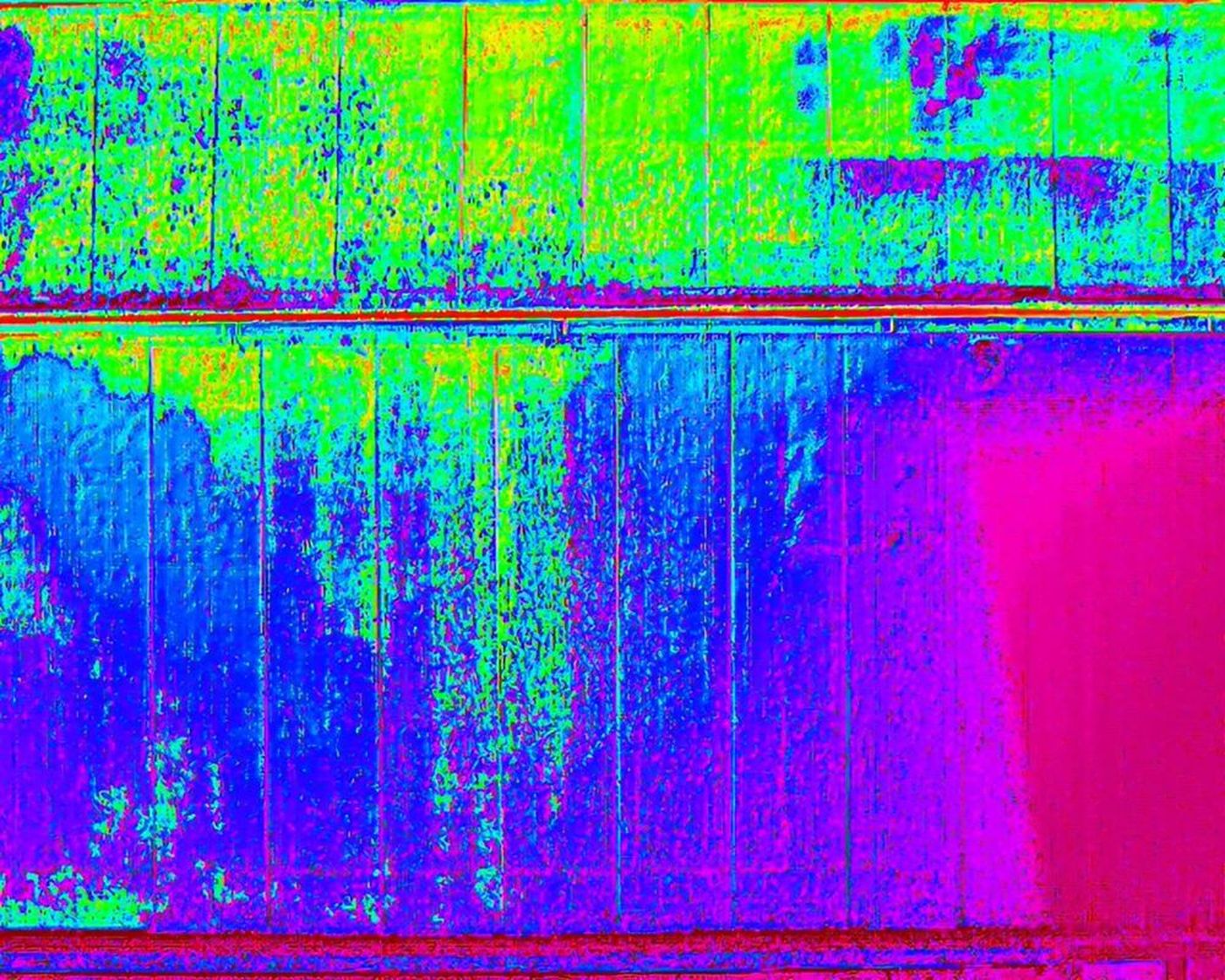
Visual and thermal, side by side
We fly a DJI Matrice 4T, which captures a visual and a thermal image at the same moment from the same position. That matters: a thermal image on its own is easy to misread, because sun, shade and surface finish all change the readings. Pairing each thermal frame with its visual twin lets an inspector tell real moisture from a shadow.
- Flat roofs: water trapped under the membrane, wet insulation and ponding that spreads beyond the visible tide marks.
- Pitched roofs: damp patches, failed repairs and heat loss through the roof.
- Walls and facades: missing insulation, cold bridges and heat escaping around openings.
What you get
A report with the thermal and visual images side by side, the areas of concern marked up and measured, and a plain explanation of what each one is likely to be. Where it helps, we recommend a short targeted check, so repair money goes on the right square metres of roof.
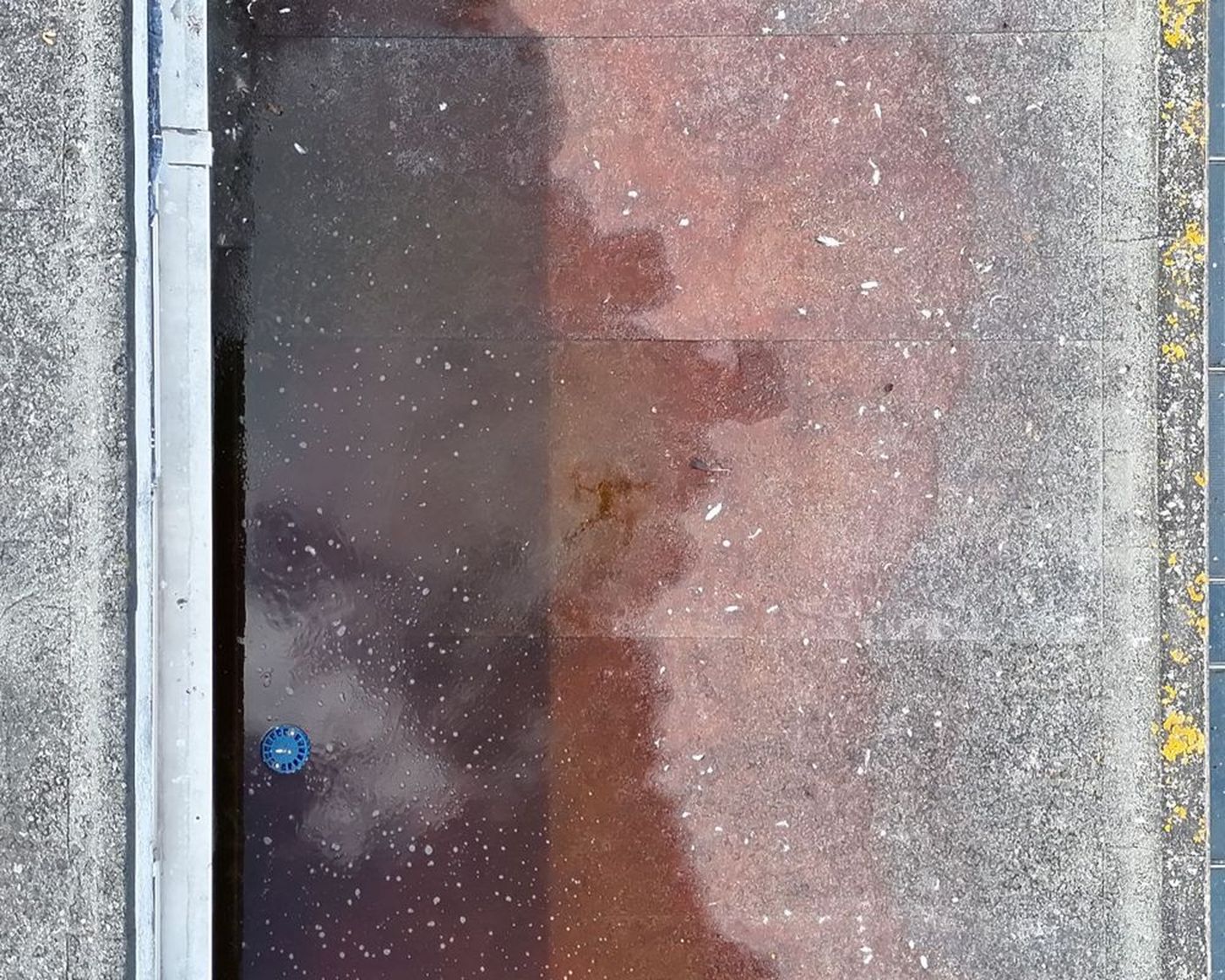
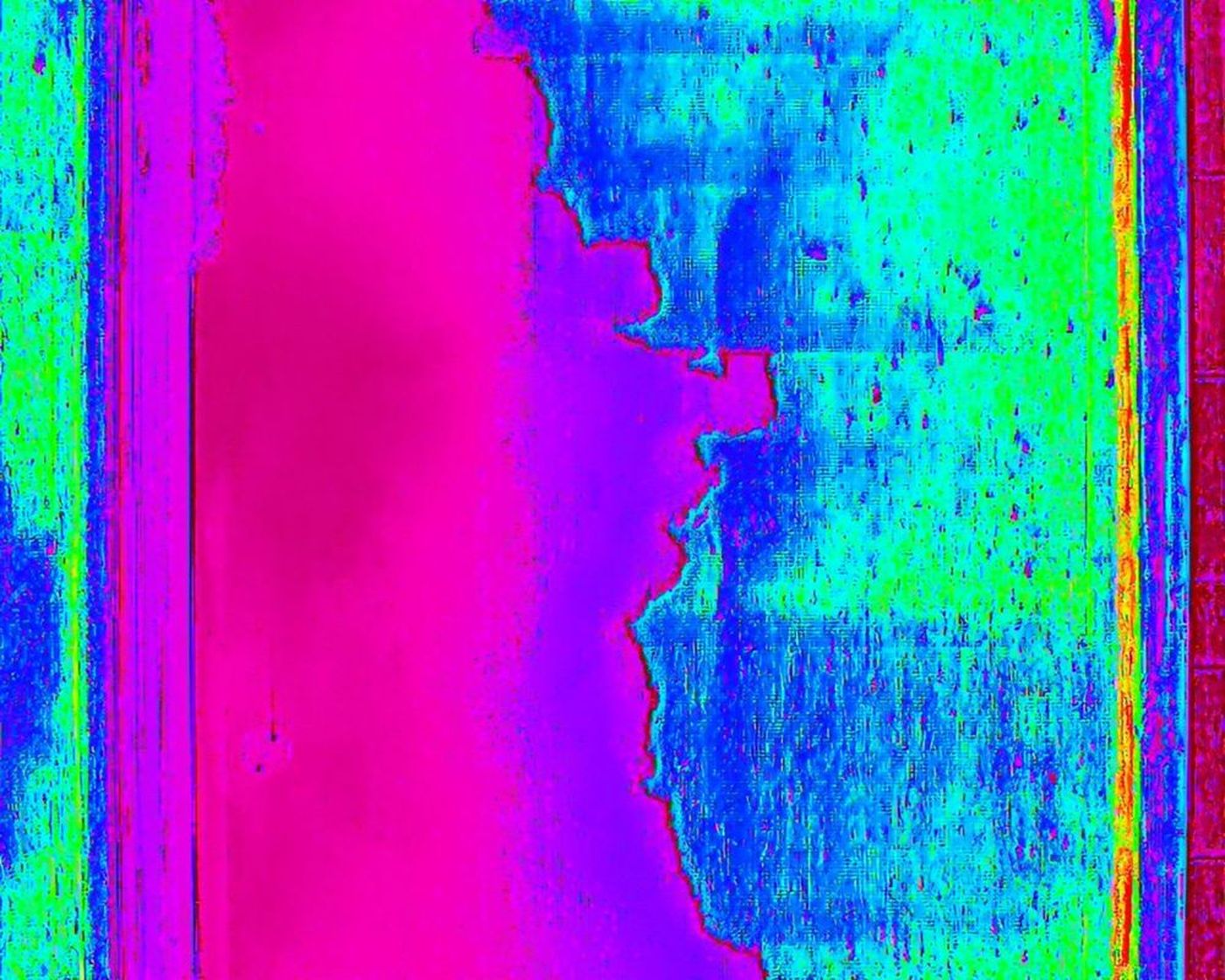
The same channel in visual and thermal. Standing water shows as a sharply defined cool area.
See it on a real job
On a housing estate in Pimlico, thermal images showed water spreading well beyond the tide marks visible from above, into roof that looked dry. Read the Pimlico flat roof case study.
What does a thermal drone survey show?
Differences in surface temperature. On a roof, wet insulation and trapped water hold heat differently from dry areas, so they show up as warmer or cooler patches. On walls it can show missing insulation, cold bridges and heat loss.
When is the best time for a thermal survey?
When there is a clear temperature difference between the roof and the air, often in the early morning or evening and in dry weather. Strong sun and shade can mislead the readings, so every thermal image is checked against a matching visual image.
Can thermal imaging find a roof leak?
It can show where water is being held in or under the roof covering, which narrows down where to look. We combine it with close-up photos and, where needed, a water test to confirm the entry point.
Is it legal to fly a drone over buildings in London?
Yes, when it is done under the right authorisation. 901 Aerial Surveys flies under a CAA operational authorisation (PDRA01), which covers commercial flights close to people and buildings. Much of London sits inside controlled or restricted airspace, so we arrange any permissions needed before the day.
Do you need access to my property?
Usually only a small, controlled take-off area, such as a car park, garden or a quiet stretch of pavement. Nobody needs to go onto the roof or into the building for the inspection itself.
What happens if the weather is bad?
Drones cannot fly safely in rain or strong wind, so we watch the forecast and move the flight if needed. We confirm the day with you beforehand.
Get a quote for a thermal survey
Send the address and what you need to know. We come back with a survey plan, a price and any airspace permissions needed.